

By Kaitlin McHenry
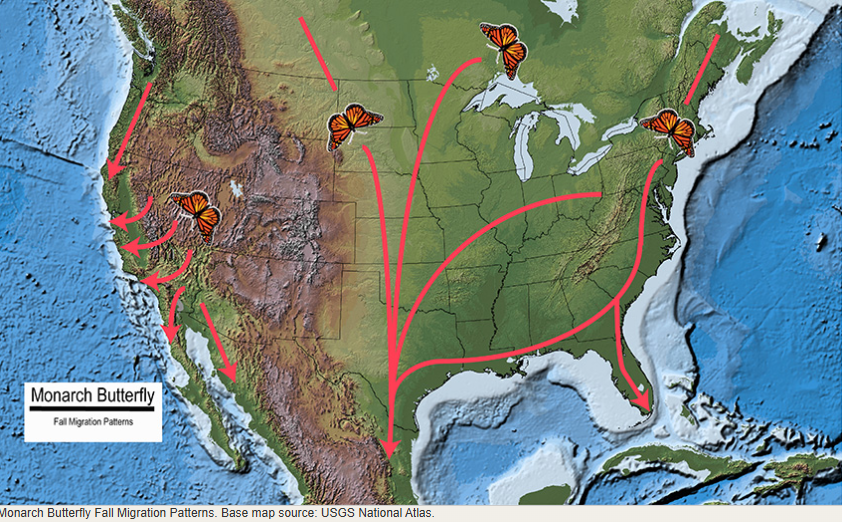
Monarch butterflies are a beautiful native pollinator of North America, and they are regular visitors at Lavender Hill Farm! These big reddish brown, black, and white spotted butterflies make gardens and meadows just a little more magical. While they appear so delicate, as if they could blow away in the breeze, these little creatures endure a 1,200 to 2,800 mile journey in their migration route as far as southwest Canada to central Mexico. They hibernate in Mexico’s forests from November through March (World Wildlife Fund). In the proper conditions, a migrating butterfly travels 50 to 100 miles a day. The longest known distance ever traveled in a day is 265 miles (USDA). This is astonishing!
A full year usually sees four generations of monarchs, but sometimes warmer temperatures can speed up growth cycles and allow for more than four. The longest living generation hatches during late summer and fall in the north, migrates south to Mexico, hibernates, and then travels north in the spring. This same generation makes it to southern U.S. which has earlier blooming milkweed plants. They lay their eggs on the milkweed, beginning the next generation, which matures and then journeys further north. By the time this second generation makes it further north, northern latitude milkweed begins blooming. The third generation hatches in the north and lays more eggs in the north. The fourth generation (sometimes more) hatch in the north in time to begin the journey back south to Mexico (Follensbee).
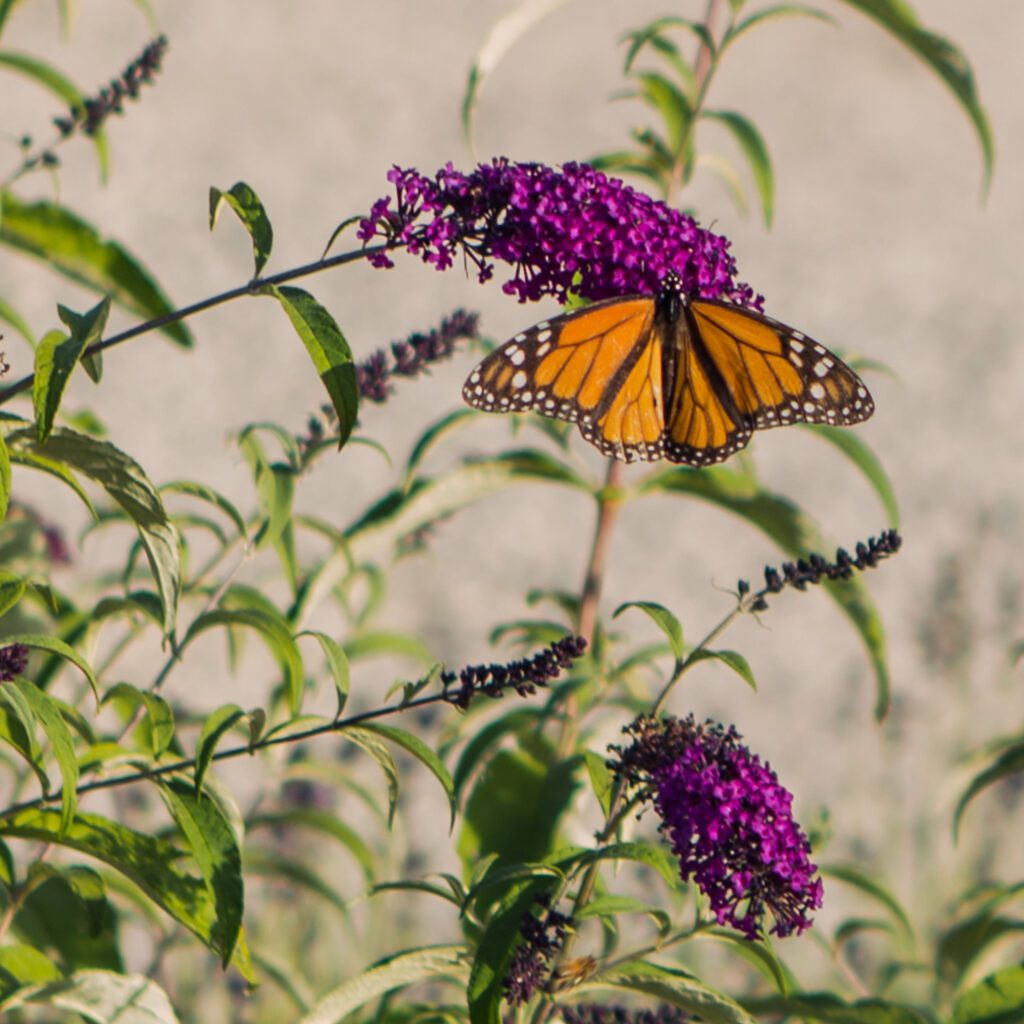
In addition to their beauty, monarchs are important because they are a valuable pollinator to many plants. Threats to monarchs include deforestation of their hibernation habitats, widespread use of insecticides and herbicides, and climate change. Herbicides and land development have reduced the amount of wild milkweed plants which are monarch caterpillars’ only food source. Insecticides are harmful to a wild range of insects and hurt monarch populations. Monarchs rely on environmental cues for migration and consistent hibernation conditions. Changes in climate can make their miraculous journey more unpredictable and hibernation sites unstable (World Wildlife Fund).
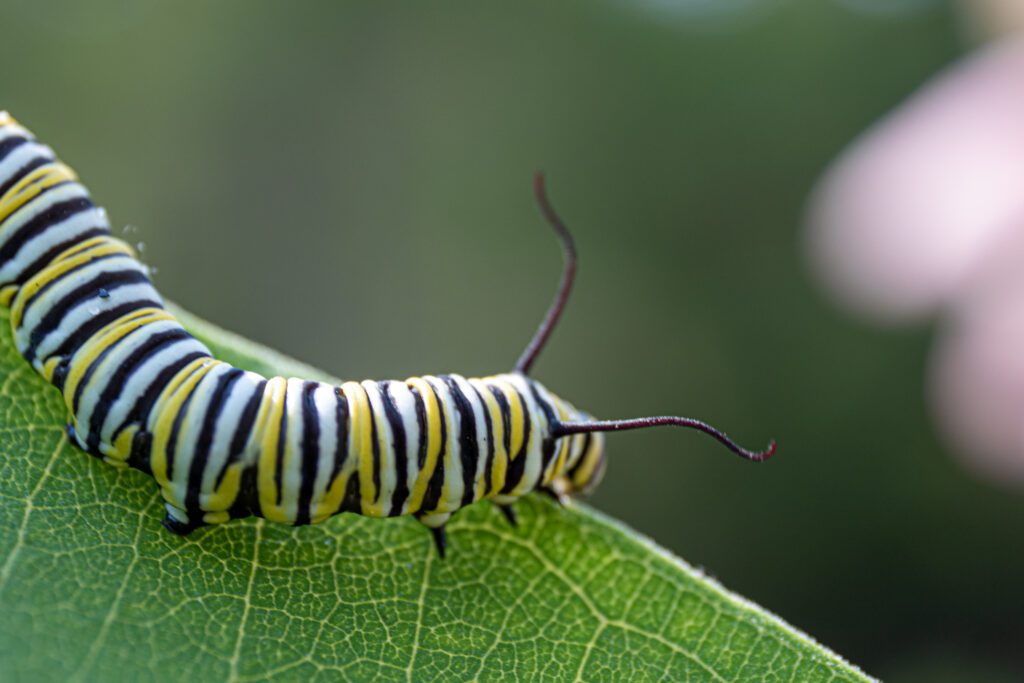
Planting flowers will invite monarch butterflies, but planting milkweed specifically is even better because it will support their entire life cycle and population growth. Adult butterflies enjoy the milkweed flower’s nectar and lay their eggs on the milkweed, then the growing caterpillars feed on the leaves. The milkweed has natural defenses with its leaf hairs and toxic milky sap. While the toxic sap protects the milkweed from other insects and animals, it also protects the monarch caterpillars and butterflies which feed on the plant and retain this toxin in their bodies. In return, monarch butterflies pollinate milkweed flowers so their population will thrive. Milkweed and monarchs have a strong symbiotic relationship, but this does mean monarch populations are fully reliant on the health and widespread range of milkweed. This is why it is so important to preserve wild spaces where milkweed thrives (Joe Gardener).
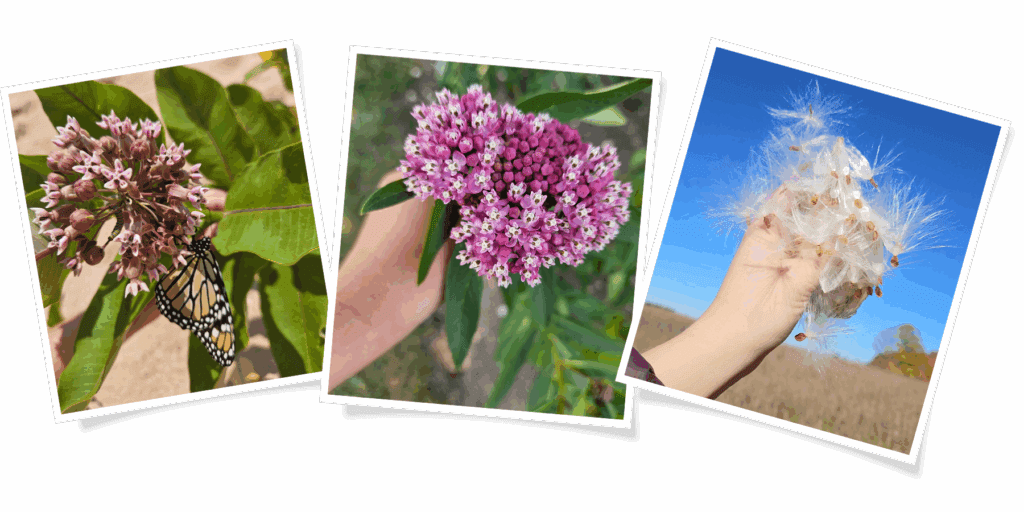
There are over 200 species of milkweed, also known as plant genus Asclepias. Most species thrive with full sun and well-draining soil, but their specific range and seed distribution varies by species (Joe Gardener). At Lavender Hill Farm, we have three species of milkweed: common milkweed (Asclepias syriaca); swamp milkweed (Asclepias incarnata); butterfly weed (Asclepias tuberosa). The swamp milkweed and butterfly weed are planted intentionally in our gardens, and the common milkweed spreads wild in our meadow spaces. All three species are native to Michigan and beneficial to monarchs, but the common milkweed is the easiest to spread due to its abundant wind spread seeds. As its name suggests, common milkweed is “common” in our area of northern Michigan. You might have milkweed growing at home and not even notice it yet. This annual plant starts growing in the springtime and grows taller until mid-summer when the plants start to bloom. After the blooms, seed pods develop through the rest of summer and into fall. In the fall, the pods will ripen and dry until they burst, releasing hundreds of seeds into the wind.
If you want to grow milkweed in your garden, learn to recognize common milkweed and collect ripe seed pods in the fall and spread them in your garden in the fall. Milkweed seeds need cold stratification to germinate in the spring which is why fall planting/spreading is best.
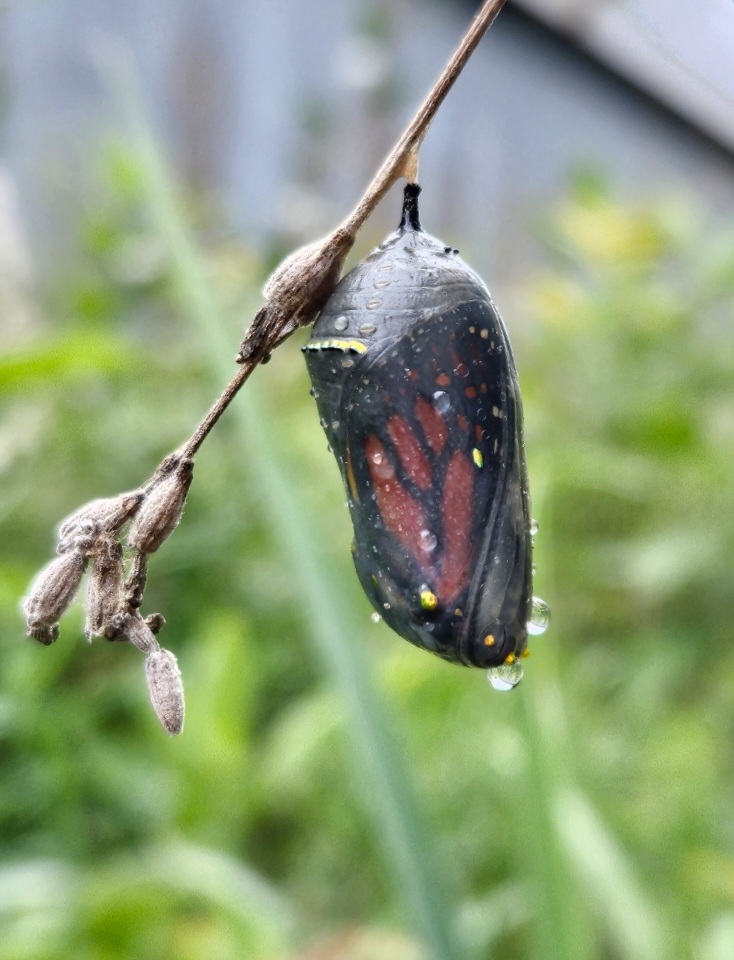
In addition to milkweed, planting a variety of native flowers with varying bloom periods is very helpful in providing consistent food supply to the butterflies. Late summer and fall plants such as goldenrod and asters are helpful for the late generations of monarchs as they prepare for a long journey south. In northern Michigan, we have seen a monarch butterfly hatch from a chrysalis as late as October 1st! Fall blooms are greatly needed for this final generation of the season to make the journey back to Mexico.
Sources
Follensbee, V. (2023, July 7). Monarch butterflies emerge: A closer look into a magnificent life cycle: U.S. Fish & Wildlife Service. U.S. Fish & Wildlife Service. https://www.fws.gov/story/2023-07/monarch-butterflies-emerge-closer-look-magnificent-life-cycle
Monarch butterflies | world wildlife fund. World Wildlife Fund. (n.d.). https://www.worldwildlife.org/species/monarch-butterfly/
Monarchs & Milkweed: A story of co-evolution: Joegardener®. Joe Gardener. (2024, August 29). https://joegardener.com/podcast/monarch-butterflies-milkweed-coevolution/
U.S. Department of Agriculture. (n.d.). Migration and Overwintering. Forest Service. https://www.fs.usda.gov/wildflowers/pollinators/Monarch_Butterfly/migration/index.shtml