LHF’s Varieties: A Journey Through the Colors, Scents, and Uses of Lavender at Our Farm
By Kaitlin McHenry
When you think of lavender, what comes to mind? A shade of light purple? A sweet and calming scent?
All of the things you imagine come from a plant that has been enjoyed by people for thousands of years. Its origins are in the Mediterranean, but over hundreds of generations, humanity has spread this perennial across the world and cultivated the many species and varieties that exist today.
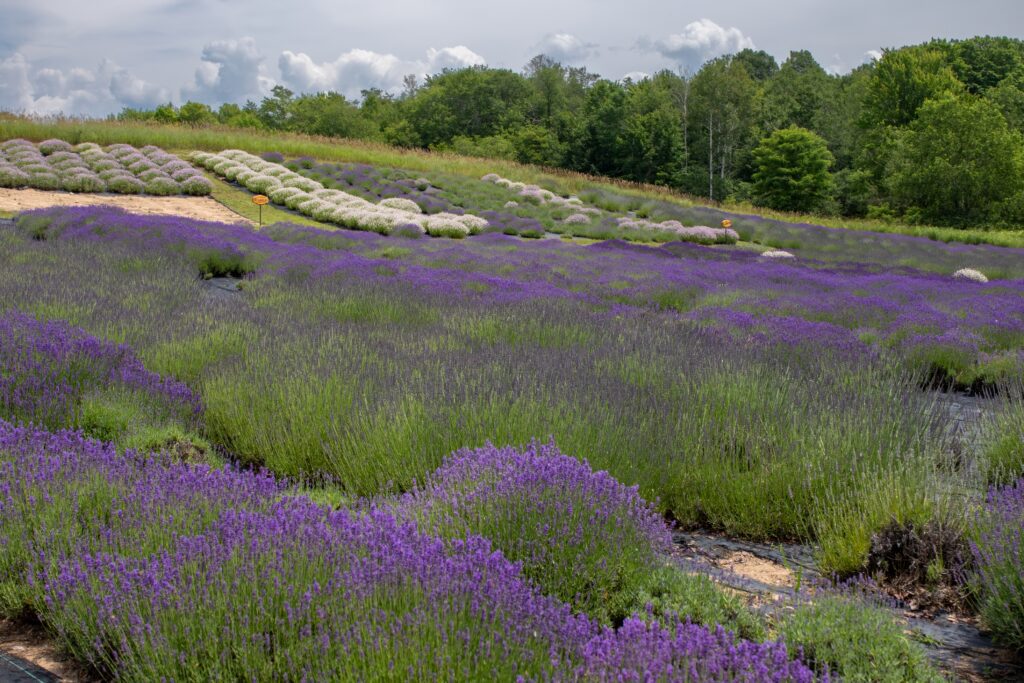
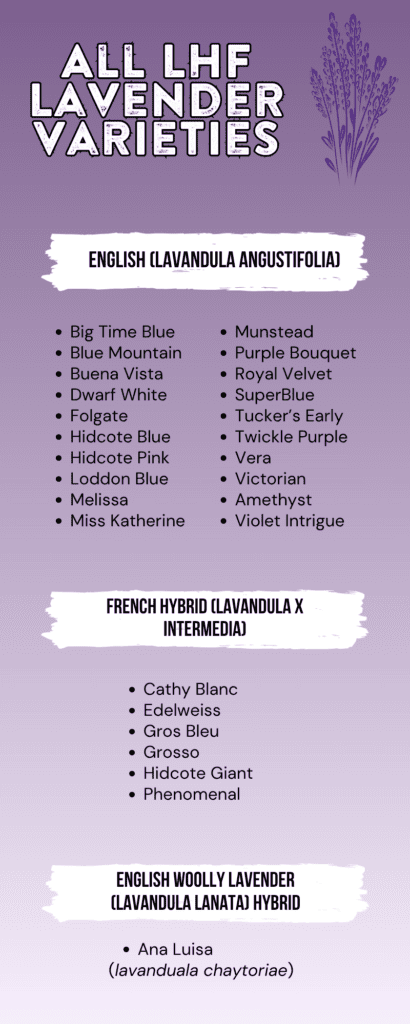
Worldwide, there are over 45 species and around 450 varieties of lavender. They vary in size, shape, color, scent, flavor, and growing habits. At Lavender Hill Farm, we grow approximately 30 varieties of lavender from two species: English lavender (lavandula angustifolia) and French hybrid lavender (lavandula x intermedia). Our varieties are hardy enough to survive our cold winters in northern Michigan (Zone 5a-5b).
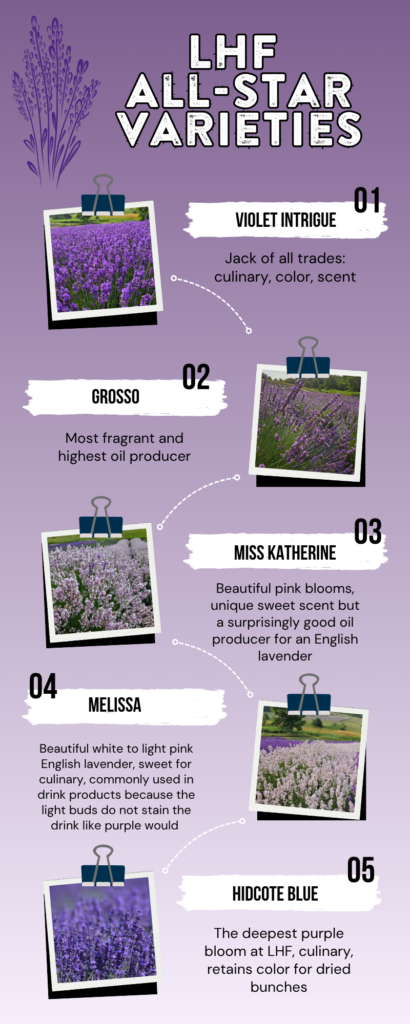
Our lavender varieties have many different colors, scents, and uses. Our bloom period begins in late June to early July and continues through mid-Aug. During this window, especially in July, our fields are striped with different colors of pink, white, and shades of purple from deep violet to lilac.
ENGLISH LAVENDER
Our English lavender blooms earlier than the French hybrid which is helpful in spreading out the harvesting process and prolonging the bloom window for guests to enjoy. In the field, English lavender tends to be shorter and grow out more hedge-like compared to the French hybrids. English lavender also grows shorter stems which vary by variety. Dwarf white has the shortest stems and is one of the first bloomers. Purple Bouquet has tall stems compared to the rest of the English. English lavender is also milder in scent. It has a lower concentration of camphor (a powerful, fragrant, and bitter terpene component). This lack of bitterness allows sweeter components like linalool and linalyl acetate to be more noticeable which makes it excellent for culinary uses. Several English varieties retain their color well after being dried which make them beautiful crafting lavender too.
FRENCH HYBRID LAVENDER
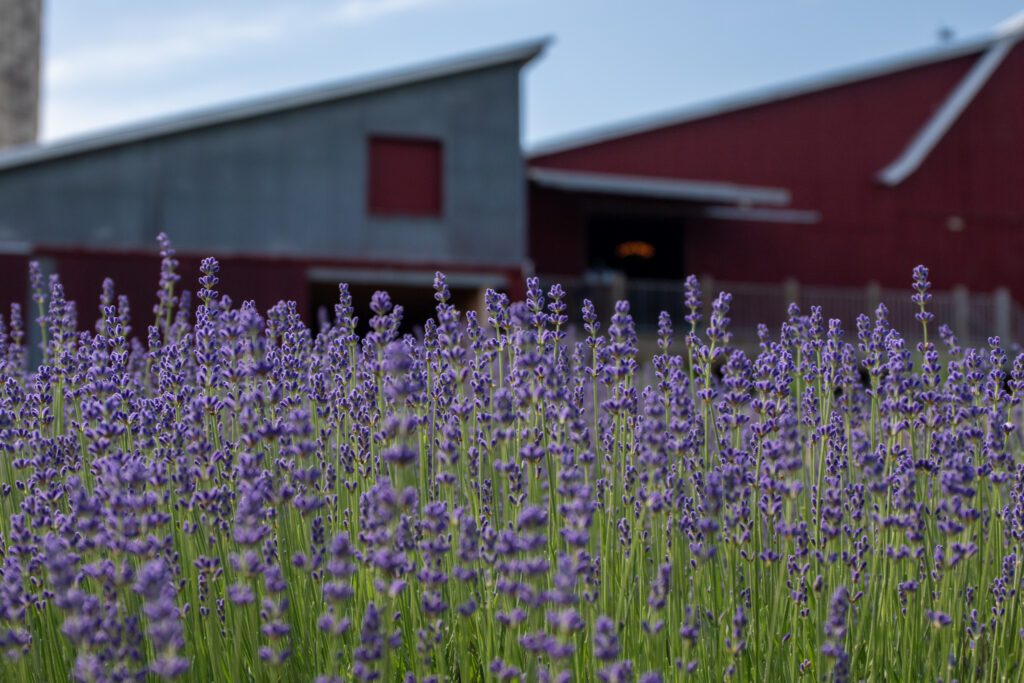
The French hybrid lavender needs a little extra time for growth before they bloom. Their stems are much taller and flowy compared to the English. The extra stem length also makes them appear larger and requires more space between plants. French hybrids have a high camphor component and essential oil yield. They are very fragrant, but the extra camphor makes the buds a little too bitter for culinary purposes. These lavender are most commonly used in products where scent is desired such as candles, lotions, sachets, neck pillows, and bug spray. The long stems make beautiful tall dried bouquets, but the buds do not hold their color the same as the English lavender.